History
Since 2006.
Organized by the people on the ground — who did the work.
Twenty years of camps. How a post-election debrief became a distributed network of organizers — and the story isn't finished.
20 years of RootsCamp
A reunion and a recommitment
This anniversary is not only about looking back. It is an invitation to reconnect alumni, credit the people and ideas that shaped the movement, document what we learned, and build the relationships the next cycle will require.
RootsCamp didn't start as a platform. It started as a camp — a few organizers in 2006 who wanted to debrief an election without a keynote, a panel, or a preset agenda. They wrote the rules in real time: whoever shows up are the right people, participants set the agenda, when it's over it's over.
Two decades later, those rules still hold. What's changed is the scale. Camps now meet in dozens of states every cycle, rural and urban organizers link in hybrid, and the collaborations that start at a camp — the sparks — get logged and tracked as they grow. This is the arc.




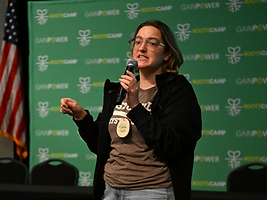


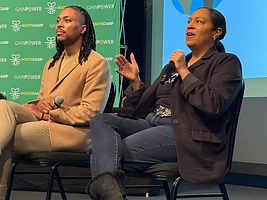



Twenty years of camps
Origins
2006 – 2010A handful of organizers turn a post-election debrief into an unconference. The rules get written at camp.
RootsCamp begins as an unconference for progressive organizers to debrief the midterm elections. No keynotes, no panels — participants set the agenda.
Local camps spread to a second state. Hosts trade notes on what made the camp work.
Expands nationally — camps meet in 15+ states to share what worked in the Obama wave.
The first National RootsCamp brings local delegates together to compare lessons across states.
Tea Party wave prompts honest cross-silo debriefs; the 'participants set the agenda' ethos is codified into the RootsCamp Rules.
Expansion
2012 – 2018Camps go hybrid, rural and urban camps connect, and the sparks leaving the camp start getting tracked.
RootsCamp goes hybrid — virtual sessions connect rural and urban organizers for the first time.
Midterm debriefs formalize the silo-mapping worksheet, pushing organizers to name who's missing from the camp.
Post-election grief fuels a nationwide network of local debrief camps in dozens of states.
Midterm wins traced back to tactics shared at prior camps — the Sparks concept is born to log what started at camp.
Pandemic & Relaunch
2020 – 2026A forced pause, a fully virtual lifeline, and a relaunch as a distributed platform built to run every cycle.
Pandemic forces fully virtual camps; tool-sharing becomes the lifeline keeping organizers connected.
Hybrid format returns; micro-grants seed local hosts who couldn't self-fund a camp.
The Federal Workers Alliance for Democracy traces its origin to a RootsCamp breakout — a spark that became rooted.
RootsCamp relaunches as a distributed platform — every state, every cycle, every camp.
What starts at camp
A spark is a collaboration, project, or connection that began at a camp. Some stay sparks. Some grow into rooted organizations. The Federal Workers Alliance for Democracy traces its origin to a single RootsCamp breakout — one camp, one conversation, and years of work that followed.
Class of 2006
Twenty years. One camp, then and now.
If you were in that first camp — or any camp since — this cycle is your reunion.
Two decades after a few organizers wrote the rules in real time, RootsCamp comes back around. Come find the people you debriefed with, see what grew from the sparks you started, and help the next camp set its agenda. Add your name, share your story, or help host a camp near you.
Keep the story going